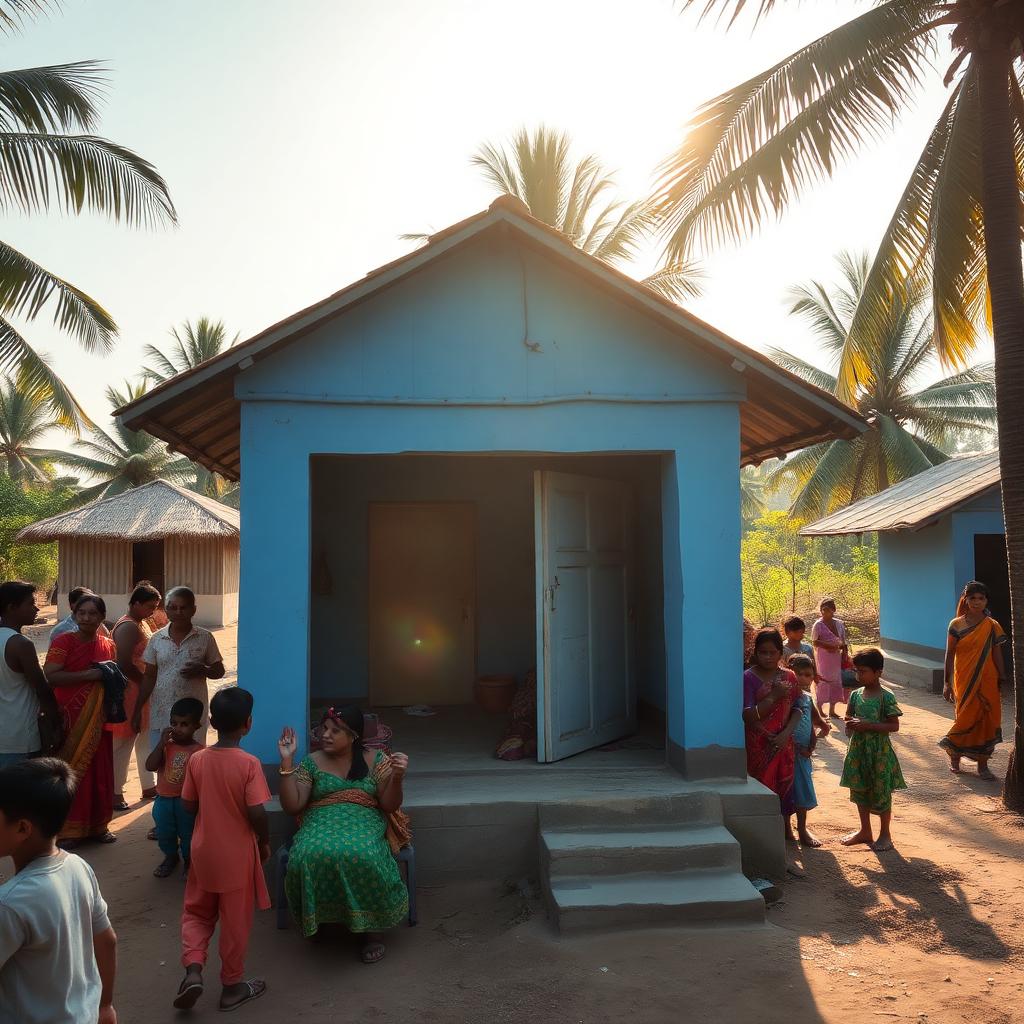
On a low stretch of coast in southern Bangladesh, where salt water now reaches fields that grew rice a decade ago, a modest new building has just opened its doors.
It is, its designers say, the first shelter in the world built specifically for people displaced by climate change — not a temporary storm refuge, but a place families can stay for weeks or months while they figure out what comes next.
The MIT-led project spent three years working with local residents on the plan. The result: a raised structure that survives flooding, generates its own solar power, catches rainwater, and includes rooms designed for women and children first.
"We wanted something that wasn't designed for them," one of the local organizers said. "We wanted something designed with them."